
A sour or bitter espresso does not always mean there is something wrong with the machine. In most cases, the taste is telling you how the coffee is being extracted. This guide explains the practical differences between under-extraction, over-extraction and uneven extraction, and shows which variables to adjust first.
Why Espresso Can Taste Sour or Bitter
Espresso flavor is strongly affected by how much soluble material is extracted from the coffee. If too little is extracted, the cup may taste sharp, thin or aggressively acidic. If too much is extracted, it may taste harsh, dry or unpleasantly bitter.
However, sourness and bitterness are not perfect diagnostic labels. Light-roasted coffee can naturally show brighter acidity, while darker roasts often contain more roast bitterness. The goal is not to remove all acidity or bitterness, but to achieve a balanced cup with sweetness, body and a clean finish.
What Is Under-Extraction?
Under-extraction occurs when water does not dissolve enough flavor from the coffee. The shot often runs too quickly and may taste sour, sharp, salty or thin.
A grind that is too coarse, a low beverage yield, insufficient brew temperature or uneven puck preparation can all reduce extraction. With lighter roasts, a slightly higher temperature or longer ratio may also be needed to bring out more sweetness.
What Is Over-Extraction?
Over-extraction happens when too much material is dissolved from the coffee. The result is often a dry, harsh, woody or astringent cup with an unpleasant bitter finish.
A grind that is too fine, an excessively high beverage yield, very high brew temperature or long contact time can all push the extraction too far. Darker roasts are usually more sensitive because the roast itself already contributes stronger bitter flavors.
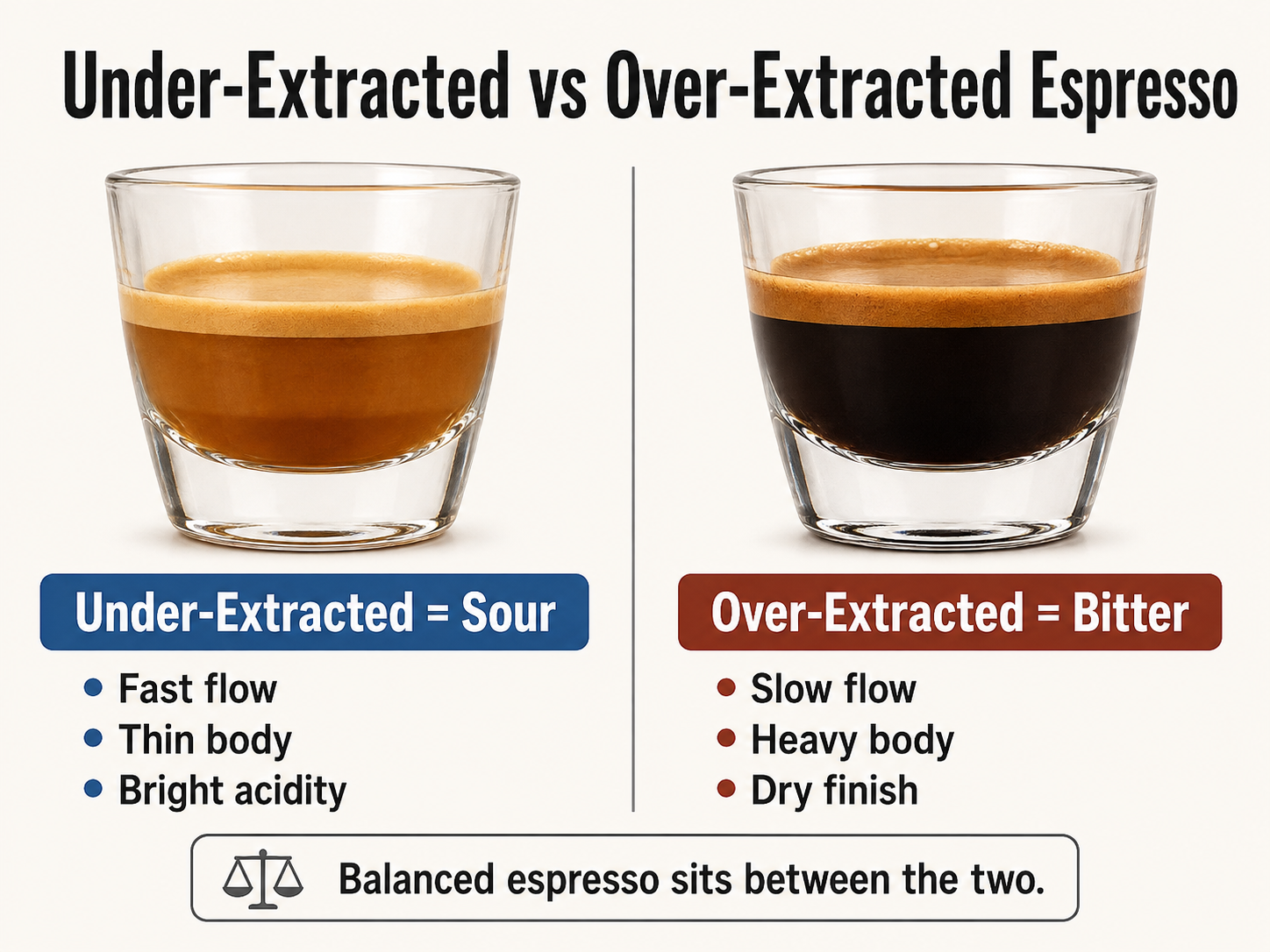
Important: Shot time alone cannot tell you whether an espresso is good or bad. Grind size, dose, yield, temperature, roast level, puck preparation and taste should be considered together.
Sour vs Bitter Espresso: Quick Comparison
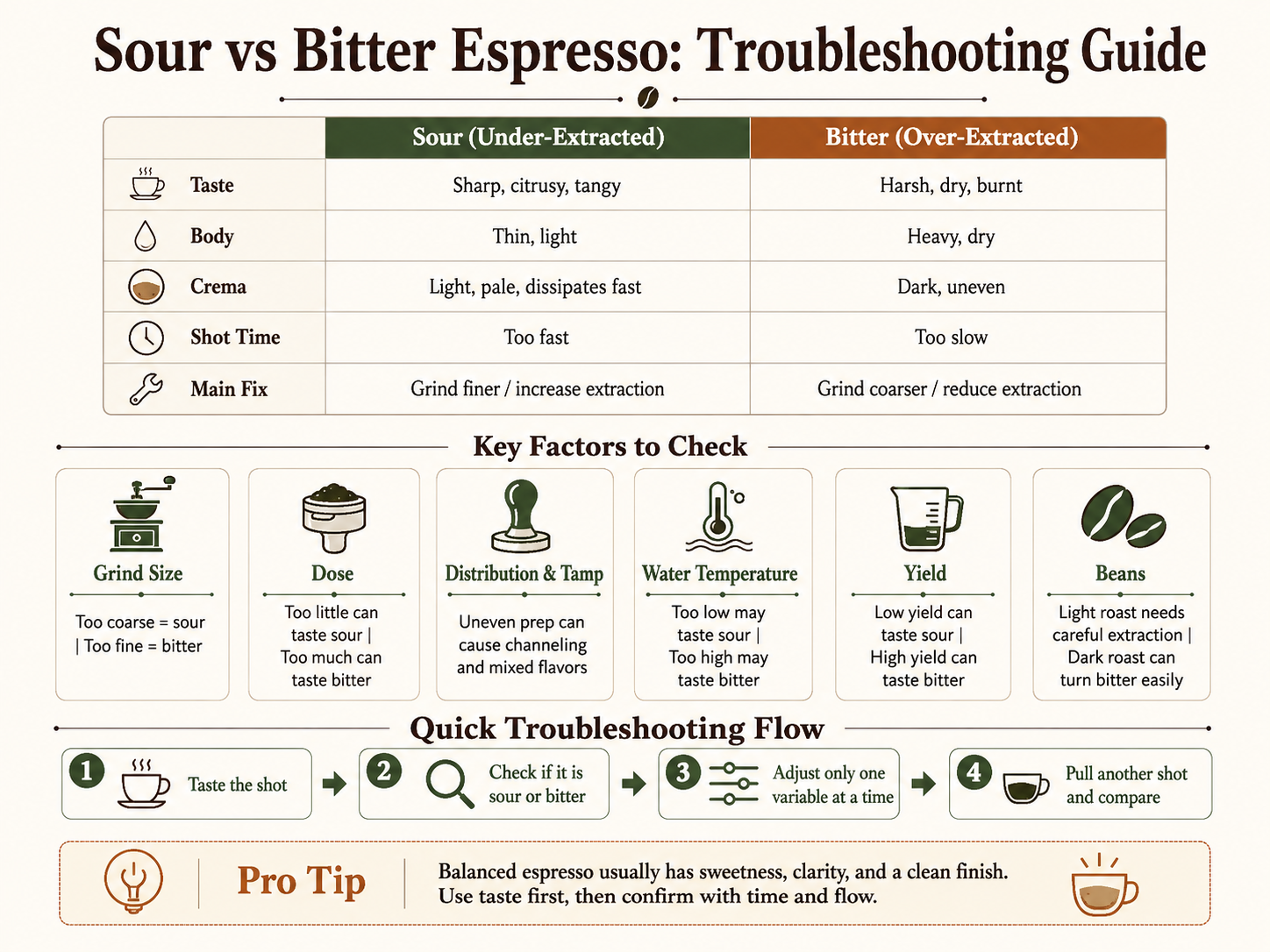
| Factor | Sour / Under-Extracted | Bitter / Over-Extracted |
|---|---|---|
| Taste | Sharp, acidic, citrusy, sometimes salty | Harsh, dry, burnt or astringent |
| Body | Often thin or light | Can feel heavy but dry |
| Typical flow | Often too fast | Often too slow |
| Grind direction | Usually try finer | Usually try coarser |
| Extraction direction | Increase extraction | Reduce extraction |
1. Grind Size
Grind size is usually the first variable to check because it directly affects resistance and flow. A coarse grind lets water pass through the puck more easily, which can cause a fast and under-extracted shot. A finer grind increases resistance and generally raises extraction.
If the espresso tastes sour and the shot runs very quickly, move slightly finer. If the shot is extremely slow and tastes bitter or dry, move slightly coarser. Small adjustments are usually more useful than large jumps.
2. Dose and Beverage Yield
Dose is the amount of ground coffee placed in the basket, while beverage yield is the amount of espresso in the cup. Both affect the final extraction.
A practical starting point is a brew ratio around 1:2, such as 18 g of coffee producing about 36 g of espresso. This is a reference rather than a fixed rule. If the shot still tastes sour, a slightly higher yield can increase extraction. If it becomes dry and bitter, reducing the yield may improve balance.
3. Water Temperature
Higher brew temperatures generally increase extraction, while lower temperatures reduce it. Light-roasted coffee often benefits from slightly higher temperatures because it is more difficult to extract. Darker roasts may taste cleaner at slightly lower temperatures.
Temperature should normally be adjusted after grind size and brew ratio are reasonably close. Large temperature changes can alter the flavor significantly and make troubleshooting more complicated.
4. Distribution, Tamping and Channeling
A shot can taste sour and bitter at the same time when extraction is uneven. One part of the puck may receive too much water while another receives too little.
This is commonly associated with channeling. Uneven distribution, coffee clumps, an angled tamp or excessive headspace problems can create weak areas in the puck. Good puck preparation helps water flow more evenly through the coffee.
5. Coffee Beans and Roast Level
The coffee itself also changes how an espresso should be dialed in. Light roasts tend to show more acidity and often need more extraction. Dark roasts extract more easily and can become bitter when the recipe is too aggressive.
Bean freshness also matters. Very old coffee may produce weak crema, fast flow and flat flavor, while extremely fresh coffee can release more gas and behave differently during extraction.
What Should You Adjust First?
If the Espresso Tastes Sour:
Check whether the shot is running too fast.
Try grinding slightly finer.
Consider a slightly higher beverage yield.
For light roasts, consider a slightly higher brew temperature.
If the Espresso Tastes Bitter:
Check whether the shot is running too slowly.
Try grinding slightly coarser.
Consider reducing the beverage yield.
For dark roasts, consider a slightly lower brew temperature.
Frequently Asked Questions
Is 25–30 seconds the perfect espresso extraction time?
No. It is a useful starting reference, but the best shot time depends on the coffee, grinder, dose, basket and recipe. Taste should be the final guide.
Why does my espresso taste sour and bitter at the same time?
This often indicates uneven extraction or channeling. Check distribution, clumping, tamp level and basket fill before making large grind changes.
Should I adjust grind size or dose first?
For most daily dialing-in, keep the dose fixed and adjust grind size first. This makes it easier to understand how each change affects flow and taste.
Does more crema mean better espresso?
Not necessarily. Crema is influenced by bean freshness, roast level, pressure and basket type. A thick crema layer does not guarantee balanced extraction or better flavor.
Final Conclusion
Sour espresso usually needs more extraction, while bitter and dry espresso usually needs less. Grind size, beverage yield and temperature are the main variables to adjust, but puck preparation and bean characteristics are equally important when the cup tastes inconsistent.
The most reliable approach is to change one variable at a time, taste the result and use shot time as a reference rather than an absolute target.
Develop Your Espresso Machine Product with Kenveo
Kenveo provides OEM/ODM appliance solutions for coffee equipment brands, importers and distributors. Contact us to discuss espresso machine specifications, extraction systems, portafilter configurations, product positioning, branding and market requirements.
Contact Kenveo