
Brushed motors and brushless motors are both widely used in electric drive systems, but they differ significantly in structure, control method, service life and performance. The right choice depends on the product’s cost target, operating conditions and performance requirements.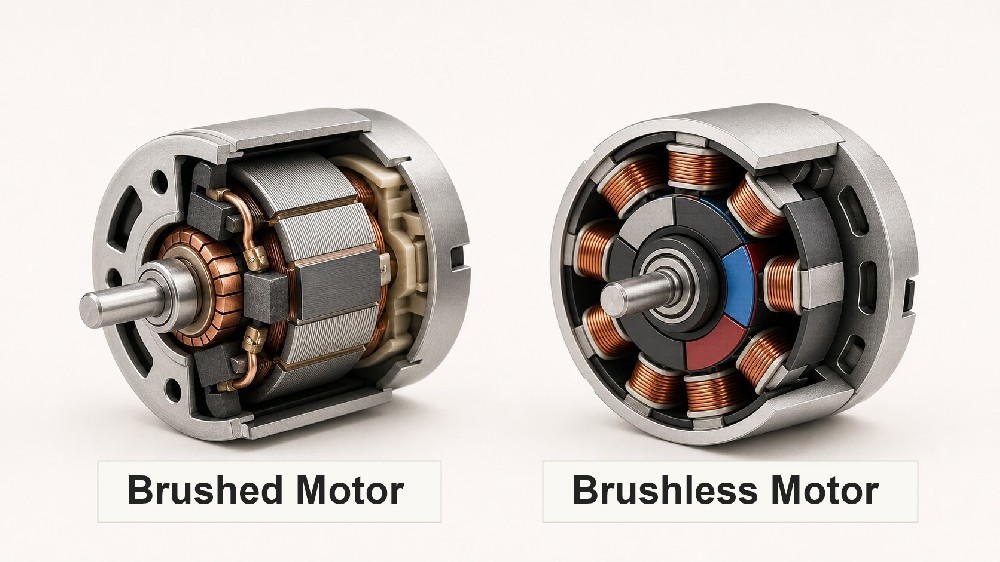
How They Work
A brushed motor uses carbon brushes and a mechanical commutator to switch current through the rotor windings. This design is simple, cost-effective and easy to control, making it suitable for basic speed control and low-cost applications.
A brushless motor, often called a BLDC motor, uses electronic commutation instead of brushes. The controller switches current through the stator windings, while the rotor usually contains permanent magnets. Because there is no brush contact, brushless motors can run more efficiently, quietly and reliably.
Main Differences
| Item | Brushed Motor | Brushless Motor |
|---|---|---|
| Commutation | Mechanical brushes and commutator | Electronic controller |
| Efficiency | Moderate | Higher |
| Service Life | Limited by brush wear | Longer, with less mechanical wear |
| Noise | Higher due to brush contact | Lower during operation |
| Maintenance | Brushes may need replacement | Low maintenance |
| Cost | Lower motor and control cost | Higher motor and controller cost |
| Control Precision | Basic control | Better speed and torque control |
Advantages and Limitations
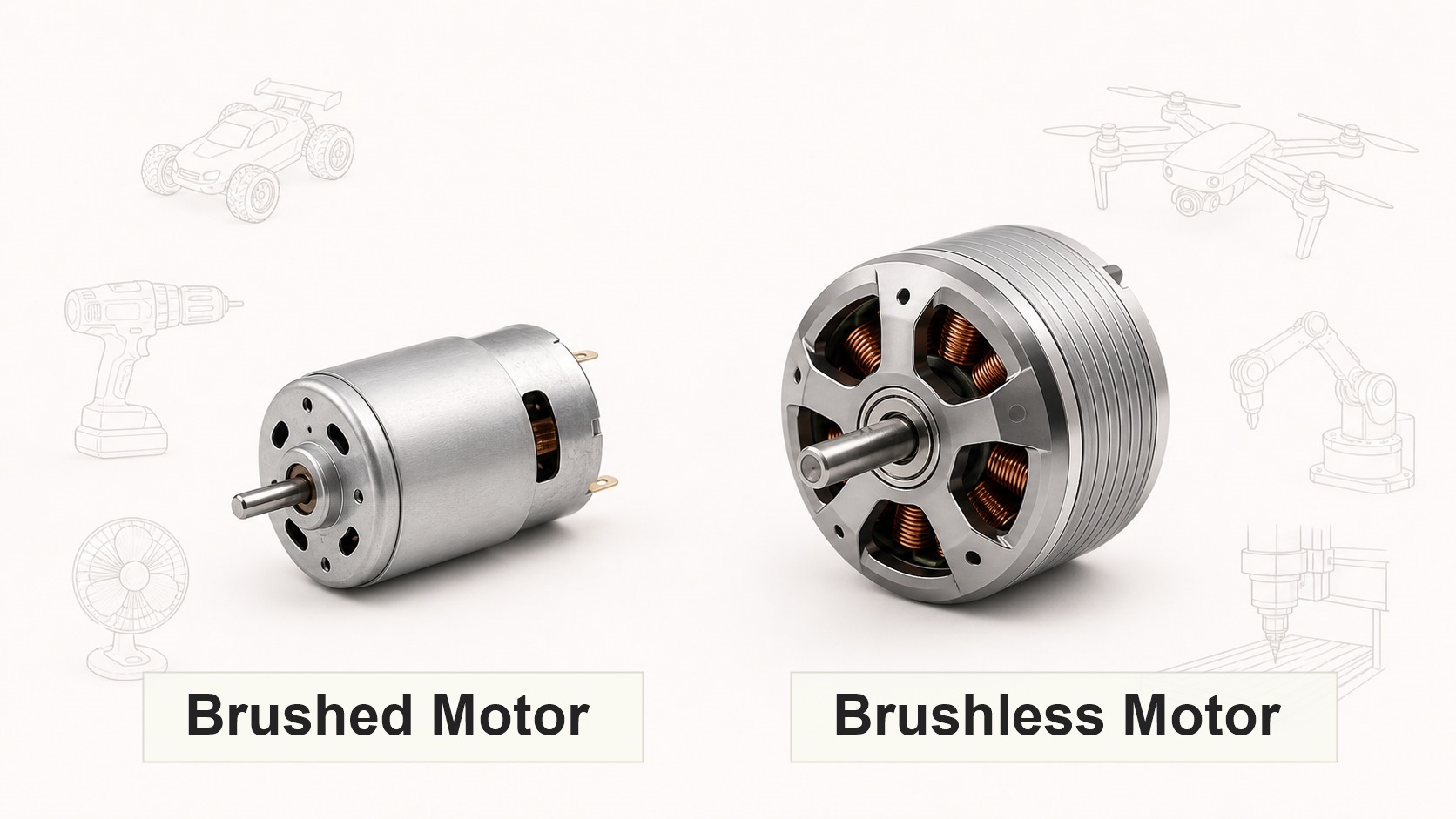
Brushed motors are a practical choice when simple structure, low cost and easy operation are more important than long service life or high efficiency. They are commonly used in toys, simple tools, small appliances and cost-sensitive equipment.
Brushless motors are better suited for applications that require higher efficiency, longer operating life, lower noise and more precise control. They are commonly used in drones, robotics, fans, power tools, automation equipment and other products that need stable long-term performance.
Which Motor Should You Choose?
Choose a brushed motor if the application requires a simple drive system, lower upfront cost and only moderate operating life. Choose a brushless motor if the product needs higher efficiency, reduced maintenance, quieter operation or precise speed control.
In short, brushed motors are economical and simple, while brushless motors provide better performance, longer life and greater reliability for demanding applications.