
For an espresso machine OEM project, start with the customer's brewing workflow, then compare the grinder, portafilter, heating system and milk preparation. Confirm the exact electrical configuration, accessories and customization scope before comparing quotations.
By KENVEO. The model comparisons below use our published product specifications. Confirm the final configuration with your quotation and evaluate samples with your intended coffee beans and recipes.
1. Define the Home Coffee Experience You Want to Sell
A private-label brand needs a clear product brief. Identify who will use the machine, what drinks they will prepare and how much control they expect. A user who enjoys weighing coffee and steaming milk has different priorities from someone who wants convenient milk drinks.
Grinding: choose an integrated grinder or a separate burr coffee grinder for the intended workflow.
Milk preparation: decide between hands-on steam frothing and an automatic milk system. Include cleaning and milk-container handling in the evaluation.
User controls: specify whether your customer needs simple drink selection or adjustable grinding time, brewing temperature, coffee volume and pre-infusion.
Installation: define the available countertop space, water-tank access and destination-market voltage and plug.
The examples in this guide focus on household espresso appliances. Confirm the intended daily usage and brewing sequence when requesting a model recommendation.
2. Shortlist a Platform Using Specific Configurations
These four KENVEO models illustrate different configurations for a home coffee range. Use the linked specifications to build a shortlist and request samples that match the proposed order configuration.
| Model | Portafilter and grinder | Controls and preparation | Water capacity |
|---|---|---|---|
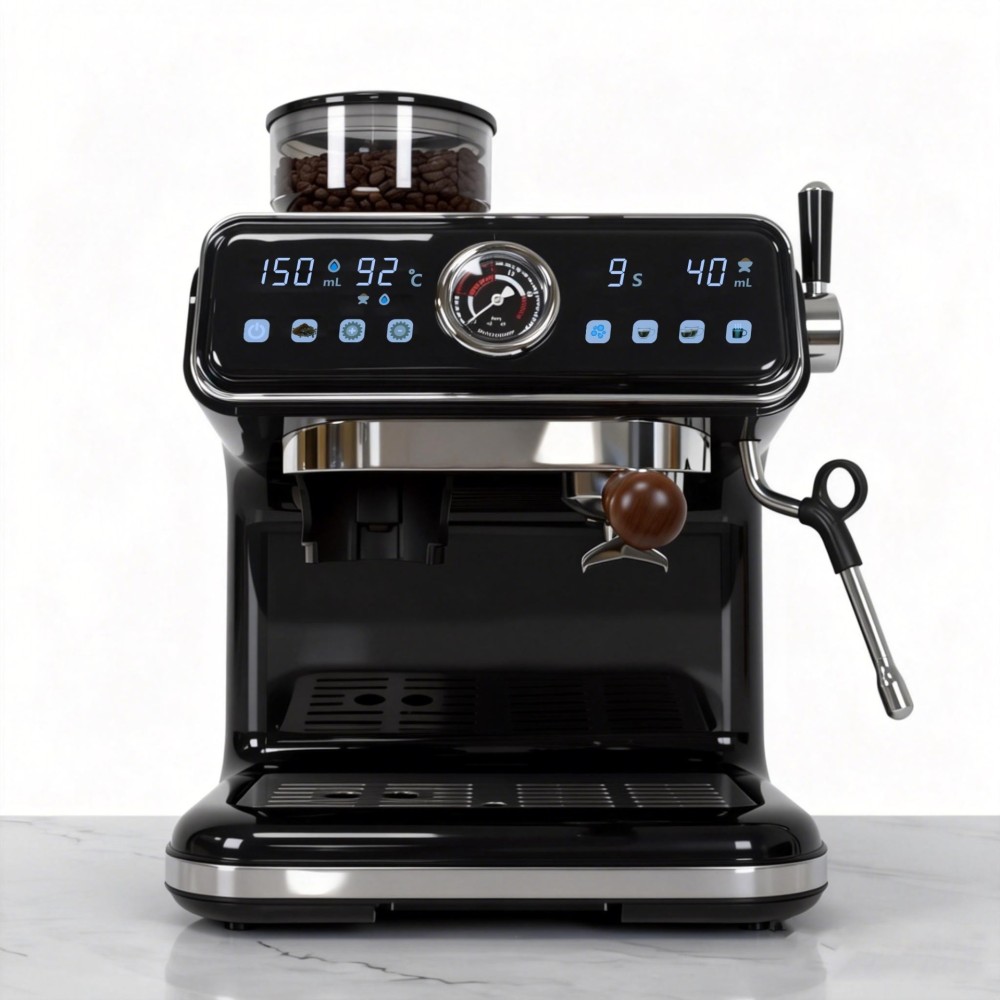
| K-EM3722 | 51mm; built-in conical burr grinder with 20 settings | Touch control; adjustable brewing temperature and time; steam frothing functions | 2.0L |
| K-EM3720 | 58mm; built-in grinder with 30 settings | Thermoblock heating; adjustable extraction temperature and time | 2.1L |
| EM3724 | 58mm; built-in grinder with 18 settings | Dual boilers and dual pumps; PID; adjustable pre-infusion, brewing temperature and coffee volume | 3.5L |
| EM3723 | 51mm; built-in conical burr grinder with 20 settings | Automatic milk frother; temperature and brewing-time display; hot and iced drink functions | 2.0L water tank; 370ml milk tank |
3. Check the Complete Brewing and Accessory System
A 51mm or 58mm specification helps define the product platform, but basket diameter alone does not establish coffee quality or accessory compatibility. Confirm basket capacity, locking-tab dimensions, the supplied tamper, filter baskets and any dosing accessories. Our portafilter size and compatibility guide explains what buyers should check.
Compare the available grind adjustment and brewing controls alongside the heating and milk system. When a specification lists pump pressure, ask how pressure is controlled during brewing and assess the machine using an agreed coffee recipe. For a milk-focused range, also review the preparation sequence and cleaning routine.
4. Separate Branding Requirements from Product Development
List each requested change clearly. Logo placement, retail packaging and instruction-manual artwork should be specified separately from color, accessories, voltage, plug, control-panel or functional changes. Availability, development work and order quantities depend on the chosen model.
For a new appearance or functional requirement, ask what engineering review, tooling, sampling and approval work is needed. Confirm the documentation for the exact configuration and destination market. The KENVEO OEM and ODM process outlines how a sourcing brief moves through sampling and production approval.
5. Use a Repeatable Sample Evaluation Checklist
Agree on a test sheet before comparing samples. Record the configuration and preparation method so that a change in beans, recipe or warm-up procedure is not confused with a change in the machine.
Espresso preparation: record the beans, grind setting, coffee dose, beverage yield and extraction time.
Adjustment range: assess how easily the intended user can change grind and brewing settings and repeat the chosen recipe.
Milk workflow: prepare the drinks your customer is likely to make, then review purging, disassembly and cleaning.
Daily handling: check water-tank removal, bean refilling, drip-tray access, cup clearance and the position of the machine on a countertop.
Delivered configuration: verify the plug, rating label, included accessories, packaging and manual against the quotation.
After-sales preparation: agree on troubleshooting information, spare parts, warranty coverage and responsibility for shipping costs.
6. Send a Brief That Makes Quotations Comparable
When contacting an espresso machine OEM supplier, include the following information:
Destination country, sales channel and intended home user.
Preferred model or required grinder, milk system and brewing controls.
Voltage, frequency, plug and required market documentation.
Sample quantity, trial-order quantity and expected repeat-order quantity.
Logo, color, packaging, manuals and accessory requirements.
Requested delivery schedule and quotation basis.
Compare quotations using the same configuration, accessory list and delivery basis. Ask each supplier to identify any excluded customization, testing, tooling or shipping costs before approving an order.
Common Private Label Sourcing Questions
What is the MOQ for a private-label espresso machine?
MOQ depends on the selected model, branding method, packaging and other customization. Share the expected trial quantity and artwork requirements to receive a model-specific quotation and sample proposal.
How should a brand choose its first model?
Start with a clear user workflow and a configuration you can explain and support. Compare samples against the same requirements, then approve the specifications, accessories, packaging and after-sales arrangements before production.
Build Your Espresso Machine Shortlist with KENVEO
Browse our semi-automatic espresso machine range and machines with automatic milk systems. Send your target market, quantity and required configuration to request suitable models, samples and a quotation.